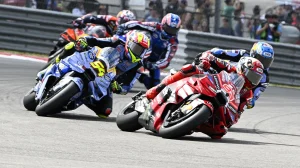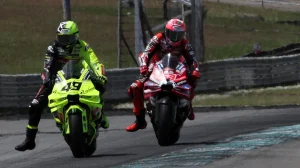

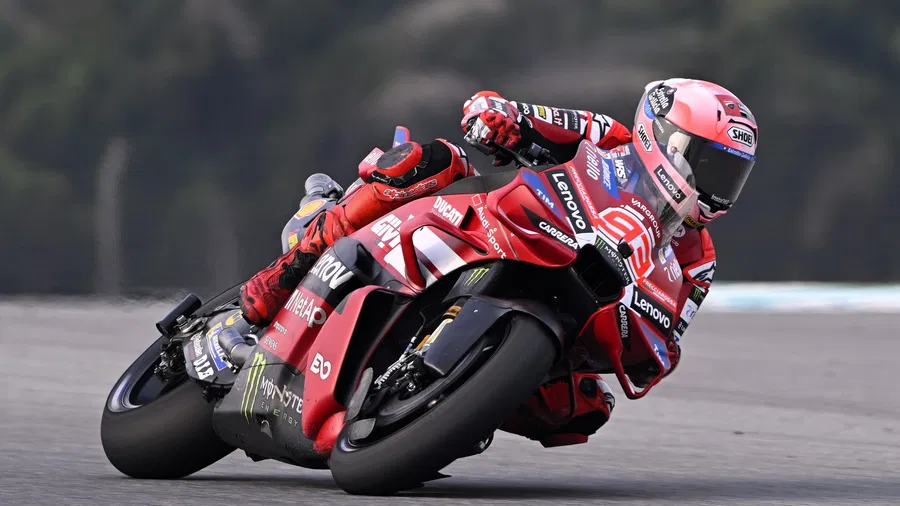
With engine specifications largely frozen for the upcoming MotoGP season, aerodynamic development has become the key area of focus for manufacturers during winter testing. Apart from Yamaha, teams must lock in their opening aero package early, with only one further in-season update allowed, putting extra pressure on the limited pre-season test days.
Reigning world champion Marc Marquez has explained how he maximises the short testing window by using the Sepang circuit to mentally replicate other tracks on the calendar. With just five official test days split between Sepang and Buriram, the factory Ducati rider relies heavily on visualisation to evaluate aerodynamic performance in different scenarios.
Returning to action after shoulder surgery last October, Marquez led the timesheets on the opening day in Malaysia and finished the test fourth overall. His strongest lap came on the final morning, where his sector times highlighted how he assessed the bike’s behaviour across a variety of corner types and straight-line sections.
By comparing specific parts of Sepang to corners and sequences found at circuits such as Qatar or Jerez, Marquez is able to judge how an aero package might perform beyond the test venue itself. This approach allows him and Ducati to gather more meaningful data when deciding which aerodynamic configuration to homologate for the start of the season.
Asked whether testing at only two circuits is enough to make such a critical decision, Marquez suggested that experience, detailed analysis and mental adaptation play a crucial role in compensating for the limited track time.