
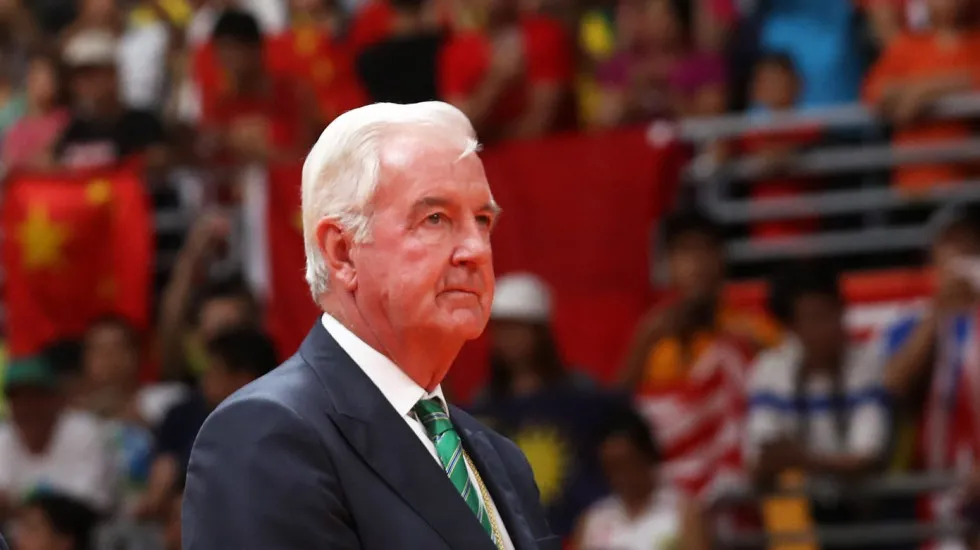
Few individuals have shaped the destiny of a sport as profoundly as Sir Craig Reedie did for badminton. From his early days as a Scottish player to becoming a transformative administrator, Reedie’s legacy is forever intertwined with badminton’s elevation to the world stage—culminating in its inclusion in the Olympic Games.
A pivotal chapter unfolded in Rome in 1982. At the time, Reedie was President of the International Badminton Federation (IBF). Seizing a rare opportunity to meet with Juan Antonio Samaranch, then President of the International Olympic Committee (IOC), Reedie passionately made the case for badminton’s Olympic status. As he recounted in his autobiography, Samaranch’s reaction was encouraging and immediate:
> “He then said: ‘When are your next world championships?’ I told him that they had been allocated to Denmark in May 1983. ‘I will come,’ he said.”
True to his word, Samaranch attended the World Championships final in Copenhagen. Witnessing the electrifying contest between Liem Swie King and Icuk Sugiarto, he became convinced of badminton’s Olympic worthiness. The official announcement came in 1985, with badminton making its Olympic debut as an exhibition sport in 1988, before finally joining the full Olympic programme in Barcelona, 1992.
This moment in Rome underscored Reedie’s central role in one of badminton’s most significant milestones. His journey began as a player, but it was as an administrator where he left his indelible mark. Reedie joined the Scottish Badminton Union (SBU) in 1964, working to elevate the profile of the Glasgow World Invitation Tournament. At just 36, he became SBU President, and in 1979, transformed a disused Glasgow paint factory into a thriving community badminton facility—still serving the city today.
Reedie’s influence continued to grow. After serving as Vice President of the European Badminton Union, he became the youngest IBF President at age 40 in 1981. He played an instrumental role in reunifying the IBF following a split and guided the sport through a period of innovation and growth.
Among his numerous contributions, Reedie championed the cause of licensed players, ending the amateur era and paving the way for professionals to retain their prize money. He was pivotal in establishing the Grand Prix circuit in 1983, the forerunner of today’s BWF World Tour. Reedie also spearheaded more frequent World Championships, synchronized the Thomas and Uber Cup competitions, and introduced the World Mixed Team Championships for the Sudirman Cup.
Reedie’s vision extended to developing the sport globally. He introduced a new world ranking system and founded the Development Committee, which played a crucial role in spreading badminton’s reach, particularly in Africa and the Americas. Badminton’s Olympic inclusion enabled the IBF to access IOC Solidarity Funds, further supporting development efforts worldwide.
After his presidency at IBF, Reedie’s leadership continued across sport. He served with distinction at the British Olympic Committee, the International Olympic Committee, and the World Anti-Doping Agency (WADA).
For his immense contributions, Reedie received global honors: the BWF’s Herbert Scheele Trophy, induction into the BWF Hall of Fame, the Olympic Order in 2023, and multiple honors from the British Crown, including CBE in 1999, knighthood in 2006, and elevation to Knight Grand Cross (GBE) in 2018.
Sir Craig Reedie’s vision, dedication, and leadership have left an enduring legacy in badminton and the wider sporting world. He will be deeply missed.