
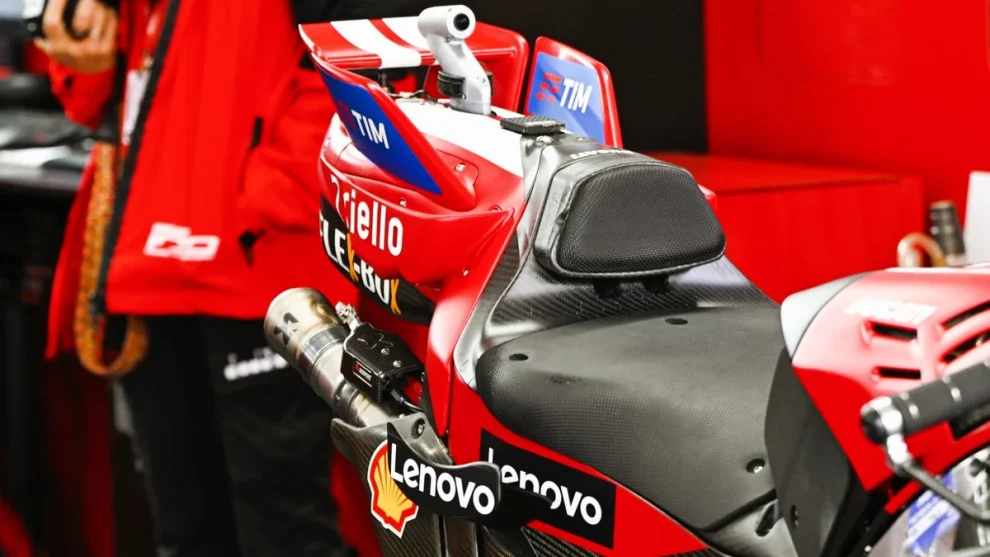
Ducati, long recognized as a leader in MotoGP aerodynamics, is now drawing inspiration from its competitors as the rear aero battle heats up in the premier class. At the recent US Grand Prix, Ducati debuted new rear aerodynamic components—including “leg wings”—on the factory bikes of Marc Marquez and Pecco Bagnaia.
The Bologna-based manufacturer pioneered the modern MotoGP aero era back in 2015, introducing winglets on their Desmosedici during pre-season testing. In the years since, Ducati’s aggressive aero development pushed the entire grid to innovate, with many rivals adopting similar concepts.
However, Aprilia has emerged as a major innovator in recent seasons, notably with the introduction of a ground-effect fairing in 2022. As front fairing updates are now restricted by homologation rules, manufacturers are focusing on smaller, intricate details to gain an edge.
The rear section of the bikes, meanwhile, remains largely unrestricted—turning it into a hotbed for aerodynamic experimentation. Aprilia again set the pace with seat-mounted “leg wings” positioned behind the rider’s legs, an area not yet governed by homologation limits. These wings are designed to enhance downforce and bike stability, especially at high speeds.
Following Aprilia’s lead, Honda and KTM have developed their own leg wing solutions, with Ducati joining the trend at the recent COTA round. Ducati’s version is more modest in size but debuts alongside a new rear wing, which closely resembles the designs currently seen on Aprilia, KTM, and Yamaha machines. The latest rear wings combine vertical “stegosaurus” style vanes with an F1-style wing profile, maximizing both downforce and aerodynamic efficiency.
Honda has also been experimenting with various rear aero components but is currently focusing on vanes rather than full wings.
As MotoGP’s aero arms race intensifies, expect continued innovation as teams search for every possible advantage—especially in the increasingly competitive world of rear aerodynamics.