
MotoGP may have just wrapped up the 2025 season, but much of the paddock’s attention is already fixed firmly on 2027. A major technical reset is coming, and with most rider contracts expiring at the end of 2026, the sport is heading toward one of the most volatile rider markets in recent memory.
Top names across the grid are set to become available at the same time, while the uncertainty of new regulations makes long-term decisions even more complex. It’s rare to see so many competitive seats potentially open at once, all with different levels of risk and opportunity.
A recent shock from North American sport offers a striking parallel. In the NHL, the Vancouver Canucks stunned fans by trading generational defenceman Quinn Hughes to the Minnesota Wild. Hughes, a franchise cornerstone and one of the league’s elite players, was moved after years of the Canucks failing to build a winning structure around him. The trade was widely viewed as a symbol of organizational failure: a once-in-a-generation talent squandered.
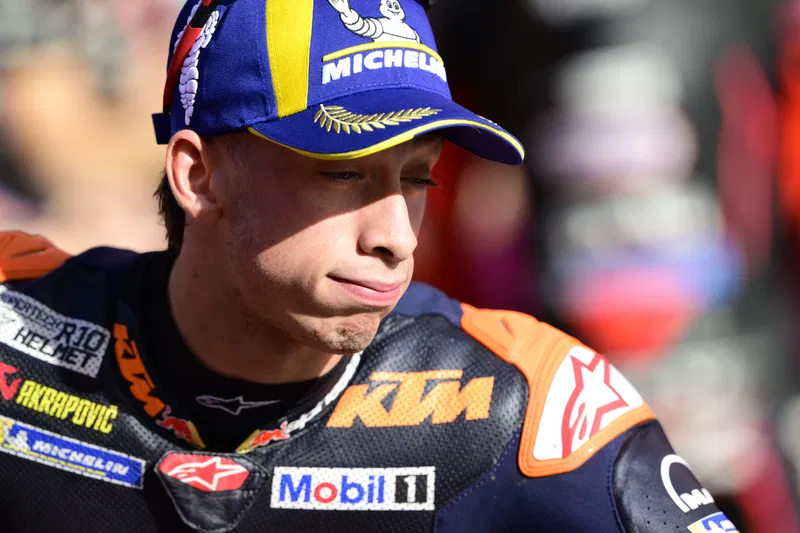
That situation mirrors a growing concern in MotoGP around Pedro Acosta and KTM.
KTM has long built its identity around rider development, from the Red Bull Rookies Cup through Moto3 and Moto2, most notably with Ajo Motorsport. This pathway has produced successful premier-class riders like Brad Binder and Miguel Oliveira, both of whom became race winners in MotoGP.
But Acosta’s arrival felt different. His Moto3 title as a rookie and rapid ascent to Moto2 stardom marked him out as a rare, potentially era-defining talent. By the time he reached MotoGP, expectations were enormous.
His debut season in 2024 backed that up. Riding the Tech3-run GASGAS RC16, Acosta fought for a podium in his very first MotoGP race in Qatar, claimed a podium soon after in Portugal, and went on to collect nine podium finishes across grands prix and sprints. Wins looked inevitable before crashes intervened late in the season.
Fast forward another year, and momentum has stalled. KTM’s struggles to consistently deliver a competitive package have left Acosta underperforming relative to his obvious ability. With rivals improving and the 2027 contract window approaching, the danger for KTM is clear: failing to capitalise on a generational rider at the peak of his value.
Just as Vancouver ultimately paid the price for not building around Quinn Hughes, KTM risks being remembered for one of MotoGP’s biggest missed opportunities if it cannot give Pedro Acosta the tools he needs before the rider market explodes.