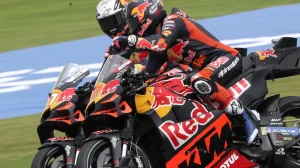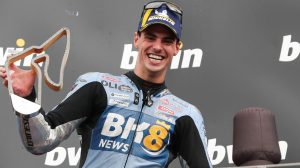

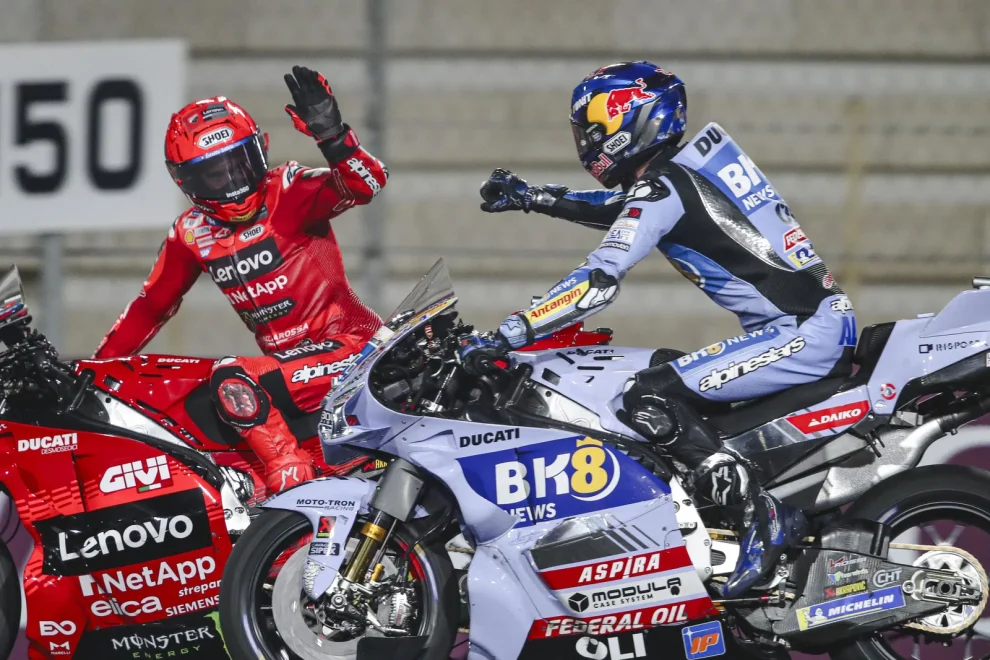
From the opening rounds of the 2025 MotoGP season, Alex Marquez made it clear he belonged among the front-runners. Three consecutive second-place finishes in Thailand, Argentina and the United States immediately put the spotlight on him, especially as he was riding year-old GP24 machinery with no guaranteed upgrades.
Despite the lack of factory status and technical updates, Marquez continued to deliver. His breakthrough came at the Spanish Grand Prix, where he secured his first MotoGP victory and briefly led the world championship, edging ahead of his brother Marc. Further wins in Barcelona and Malaysia, combined with remarkable consistency, kept him firmly second in the standings for most of the season.
Even setbacks failed to derail his campaign. Injuries from crashes at Assen and Brno, followed by difficult weekends in Austria and Hungary, could have ended his title challenge. Instead, Marquez held on, recovered strongly, and finished the year with two victories and five podiums in the final seven races, sealing the runner-up position overall.
Ducati management viewed this progression as undeniable proof of his value. According to Ducati’s racing leadership, Marquez had evolved into one of the championship’s key protagonists, fully deserving of factory-level machinery. When VR46 declined a second full-spec GP26 for financial and strategic reasons, Ducati acted quickly, seeing an opportunity to reward Marquez’s performances.
Although Alex Marquez will remain a Gresini rider in name, his 2026 package will be identical to that of the factory Ducati riders. He will run the same bike, equipment and technical support, ensuring he competes on equal footing at the highest level.
For Ducati, the decision was straightforward. Ignoring such consistent growth and results would have been counterproductive, particularly in a season where other factory riders struggled to meet expectations. Marquez’s rise made one thing clear: giving him a factory bike was not just justified, it was necessary.