
MotoGP has confirmed that front holeshot devices will be banned with immediate effect from this weekend’s Dutch Grand Prix at Assen, as part of a series of regulatory changes aimed at improving rider safety and reducing costs.
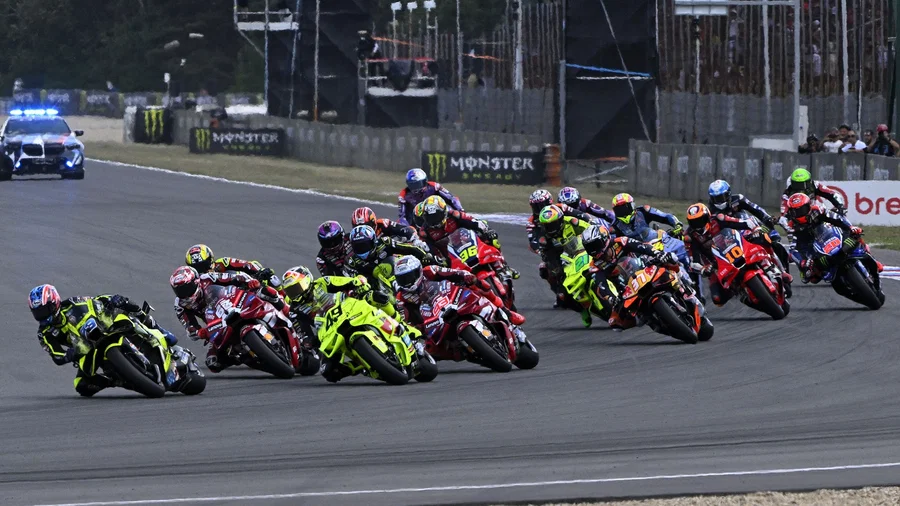
The decision was approved by the Grand Prix Commission following concerns raised by recent first-corner incidents at the Catalunya and Balaton Park rounds.
Front holeshot devices, which lower the front of the bike to improve acceleration and reduce wheelies at the start, were originally scheduled to be outlawed at the end of the 2026 season alongside rear ride-height devices. However, officials have opted to accelerate the ban after determining that the systems can create safety risks when riders brake heavily to disengage them, particularly in crowded opening laps.
Although the devices themselves were not deemed inherently dangerous, MotoGP believes their removal will reduce the likelihood of chain-reaction incidents during race starts.
The Commission also confirmed further changes for the future of the championship:
- Front holeshot devices are banned from the Assen Grand Prix onwards.
- Rear ride-height devices remain legal until the end of the 2026 season before being removed under the 2027 regulations.
- Grid procedures and starting layouts will be updated as part of wider safety measures.
- Manufacturers will face a future limit of six bikes on the grid, helping to control costs and streamline the championship.
The latest measures form part of MotoGP’s transition towards its new 2027 technical regulations, which will introduce 850cc engines, reduced aerodynamics, the elimination of ride-height devices and a switch to Pirelli tyres.
With safety and cost reduction now key priorities, the removal of front holeshot devices marks one of the most significant mid-season technical rule changes seen in MotoGP in recent years.