
MotoGP continues to search for solutions to reduce first-corner accidents, with riders, teams and officials debating whether technical and sporting changes could improve safety at race starts.
The opening corner remains one of the most dangerous moments in MotoGP, as more than 20 riders battle for position while arriving at high speed in a tightly packed group.
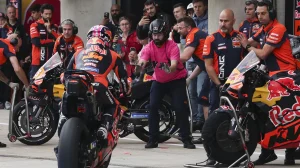
One area under scrutiny is the use of ride-height devices, also known as holeshot devices, which lower the motorcycle during the start to improve acceleration off the grid.
Several riders believe the main issue is not the increased speed but the process of disengaging the device before entering the first corner. The system often requires heavy braking to release, and if it does not disengage immediately, riders may need to alter their braking points, creating unpredictable situations in close traffic.
With little room for error at the start of a race, even minor changes in speed or braking can increase the likelihood of contact and crashes.
MotoGP has already announced plans to phase out ride-height devices in the coming years as part of broader efforts to simplify the bikes and improve safety. However, some riders have suggested the ban should be introduced earlier.
Others argue that removing the devices alone will not eliminate first-corner incidents, pointing out that such crashes existed long before the technology was introduced.
Another proposal being discussed is modifying the starting grid formation. MotoGP currently uses three riders per row, but some believe switching to a two-rider-per-row layout could spread the field out and reduce congestion heading into Turn 1.
While no immediate changes have been confirmed, discussions remain ongoing as MotoGP seeks the right balance between performance, innovation and rider safety.
For now, all parties agree on one objective: finding practical measures that can genuinely reduce first-corner crashes and make racing safer for everyone on the grid.